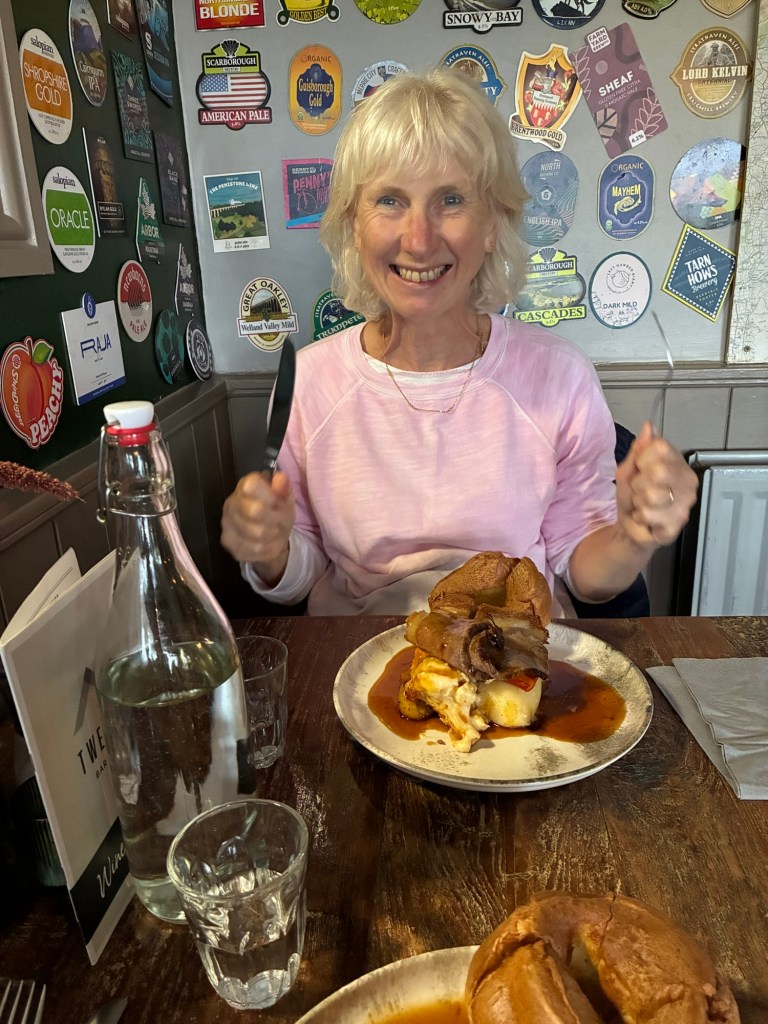
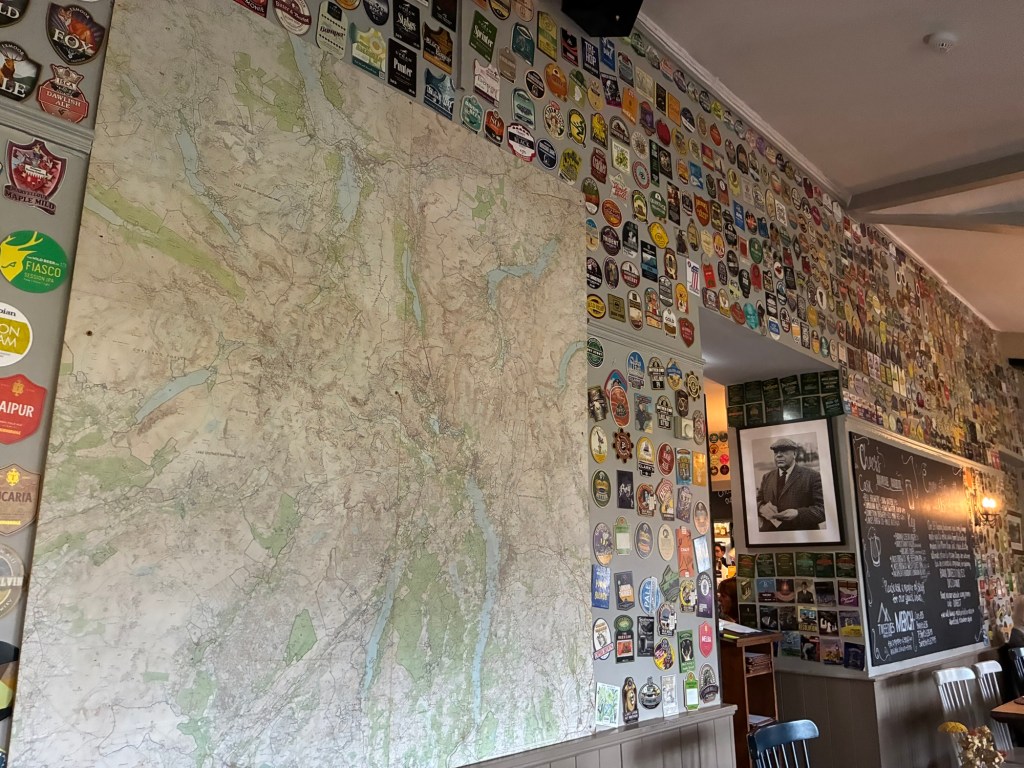
Roast dinner last night at Tweedies – someone is happy. 👍. Note the walls – soooo many breweries
Sticky toffee pudding – someone else is happy 👍👍
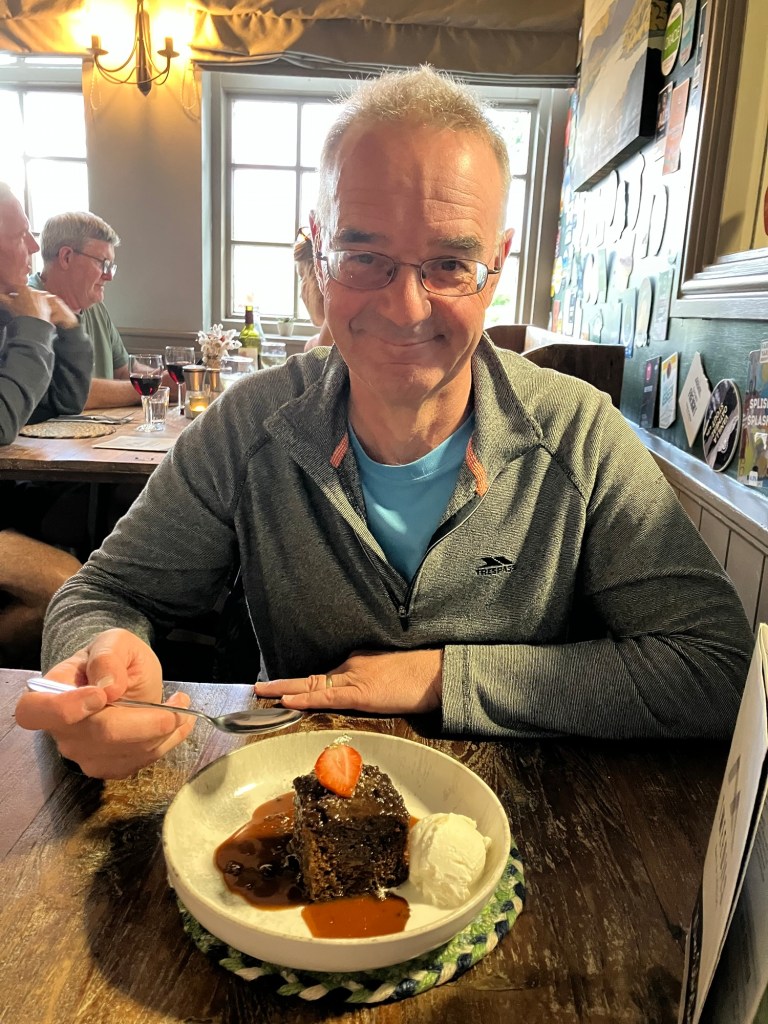
8-9/10
We also wandered round the village to get a sense of Wordsworth (as in ‘William’).
Sleepy and ‘poetic’ once the day trippers have left.
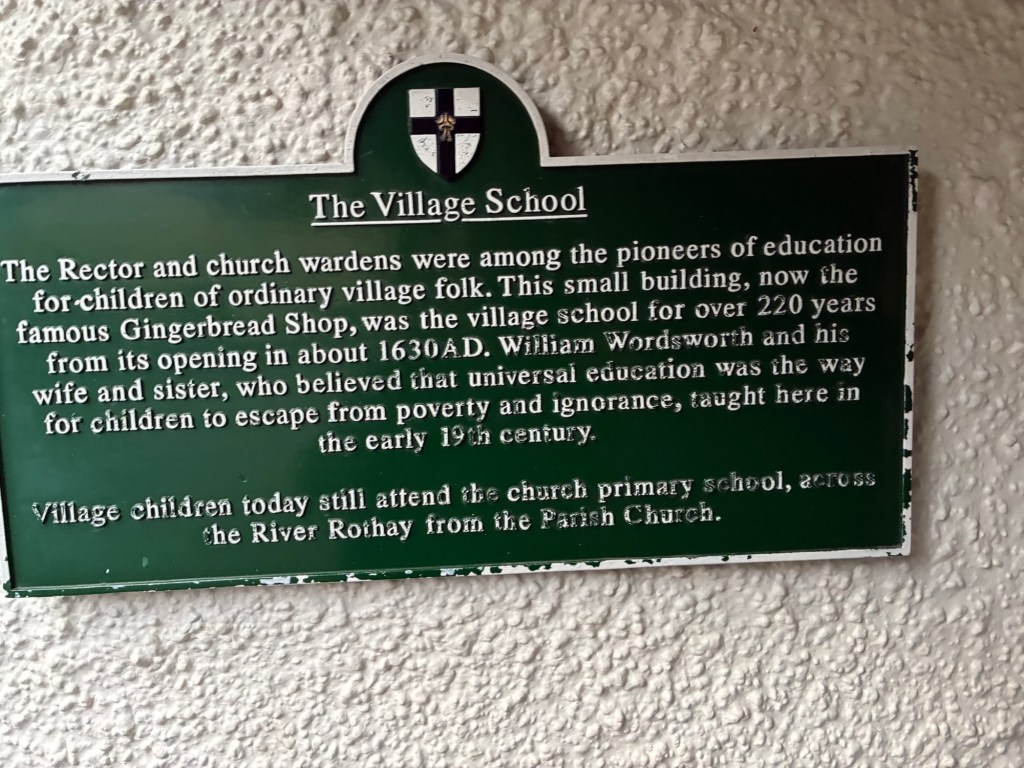
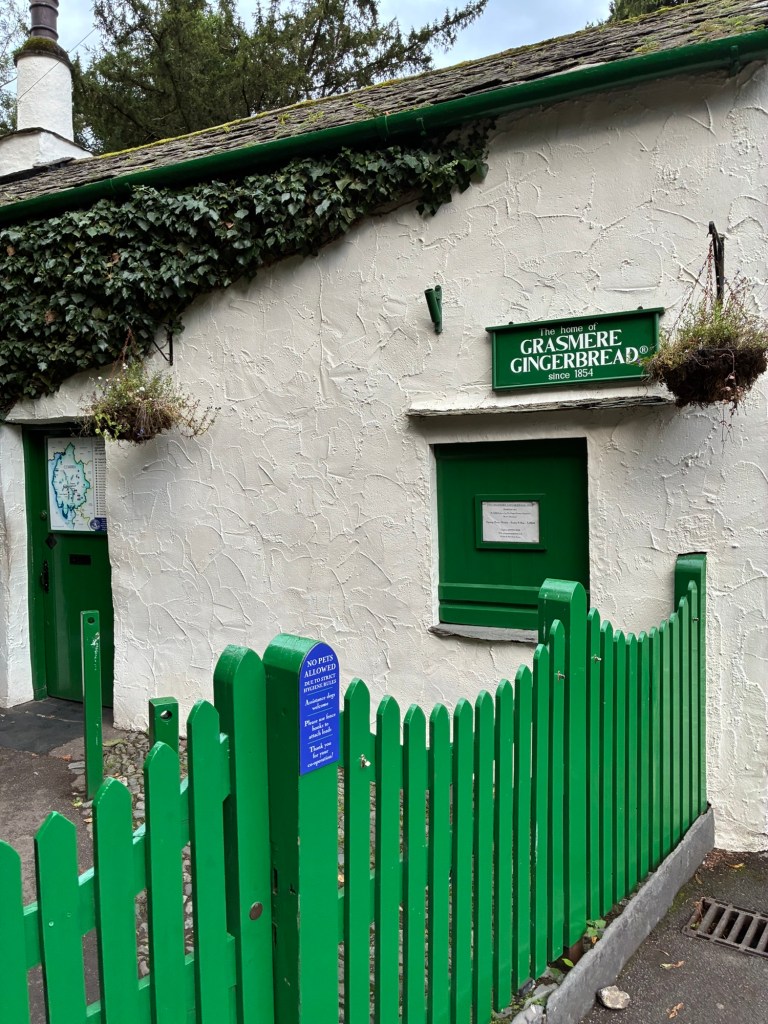
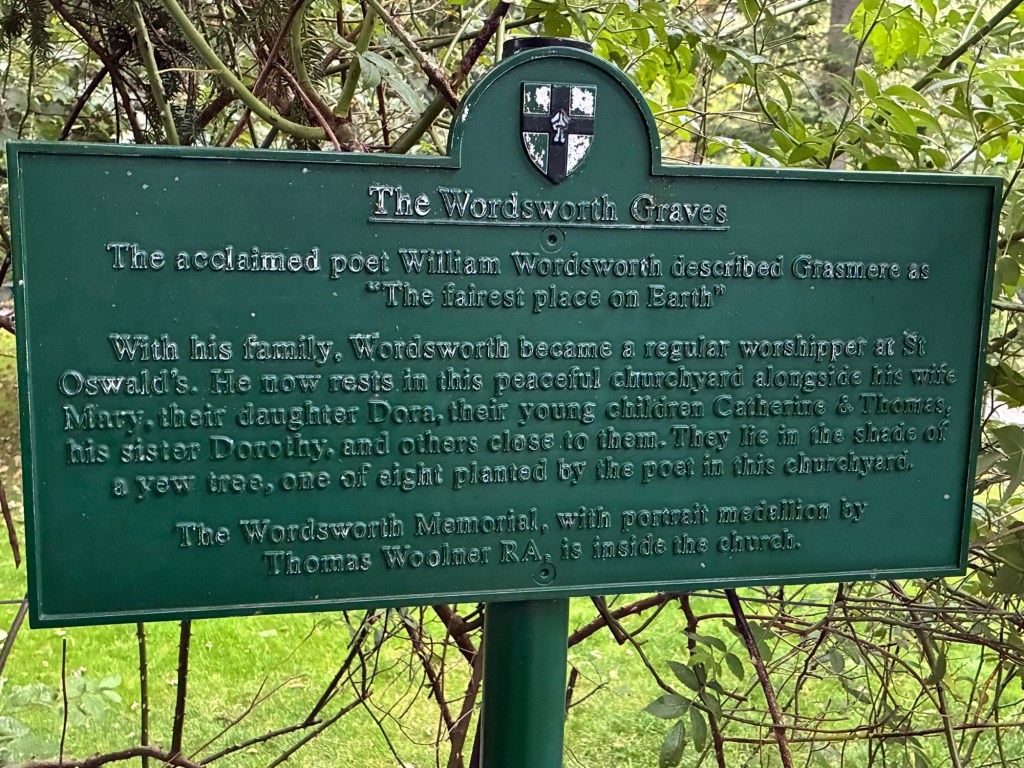
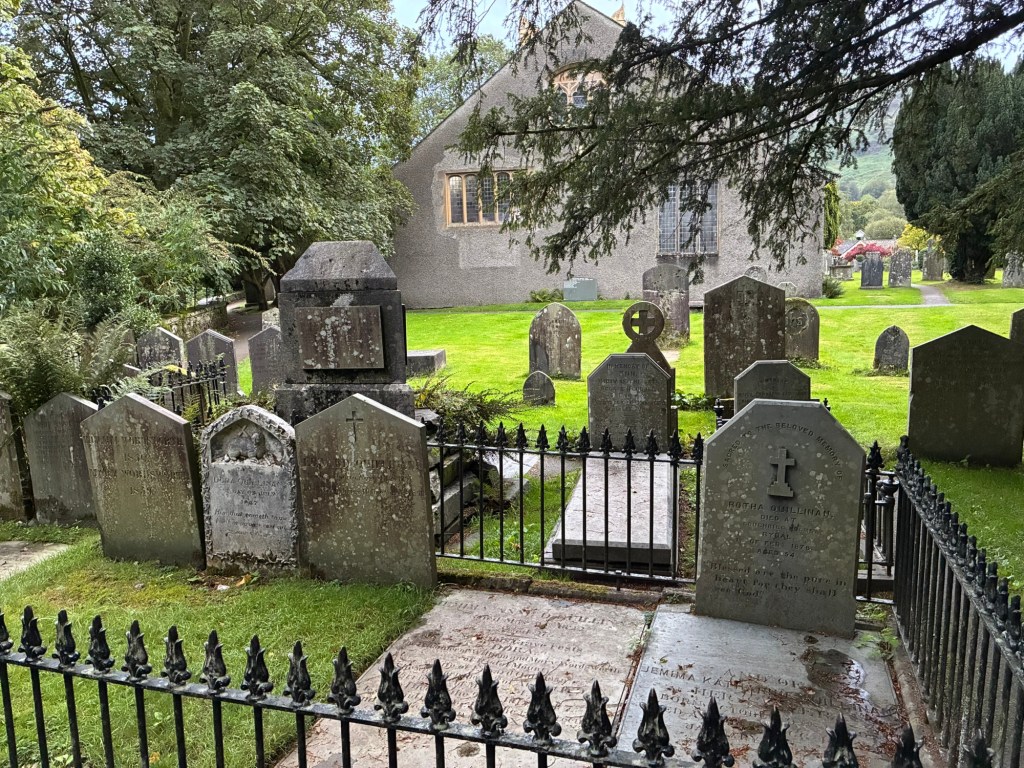
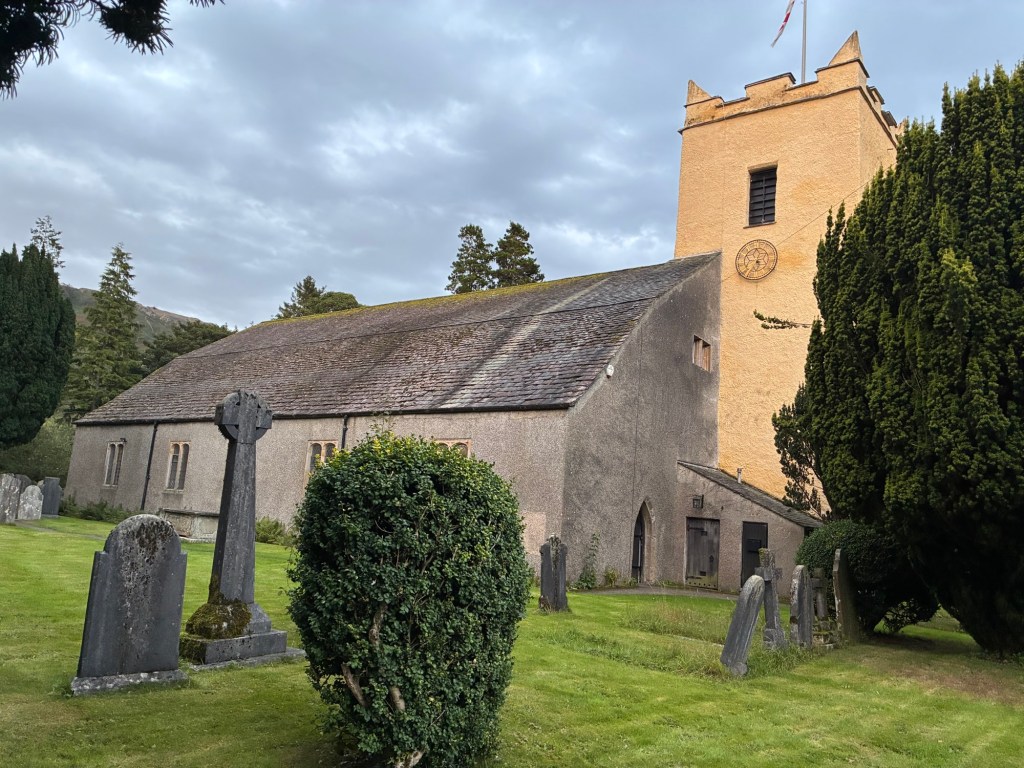
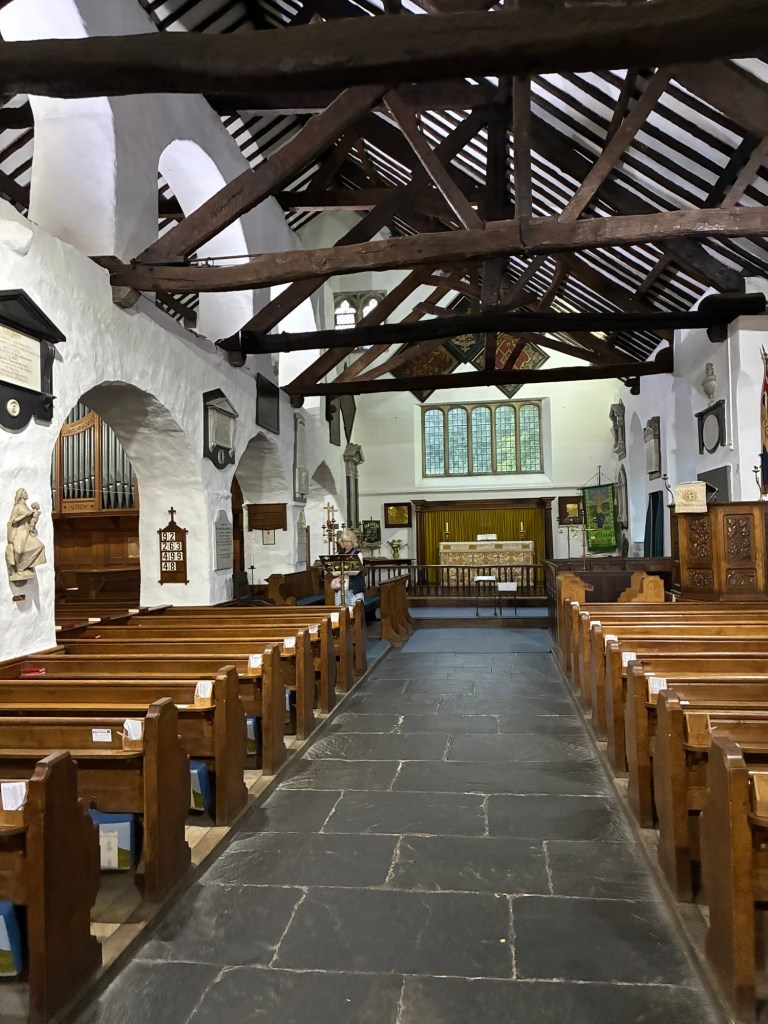
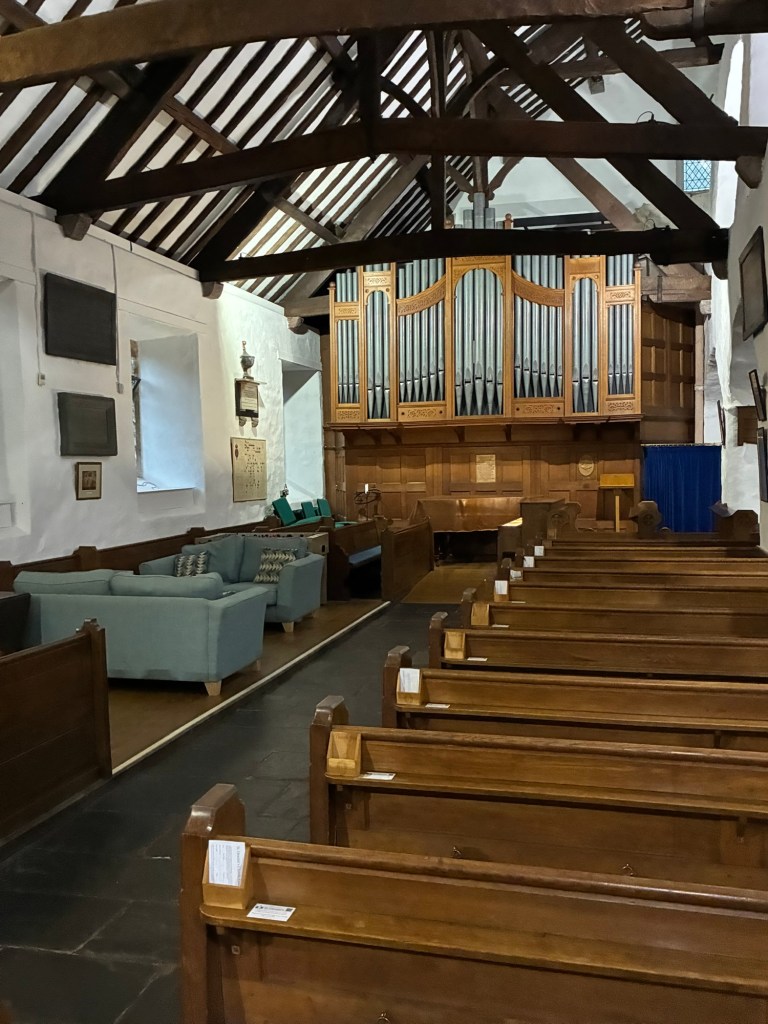
Although Wordsworth only lived here for around 9 years he ‘wrote many of his best works here’ (ref Stedman and Butler , Coast to Coast p 124)
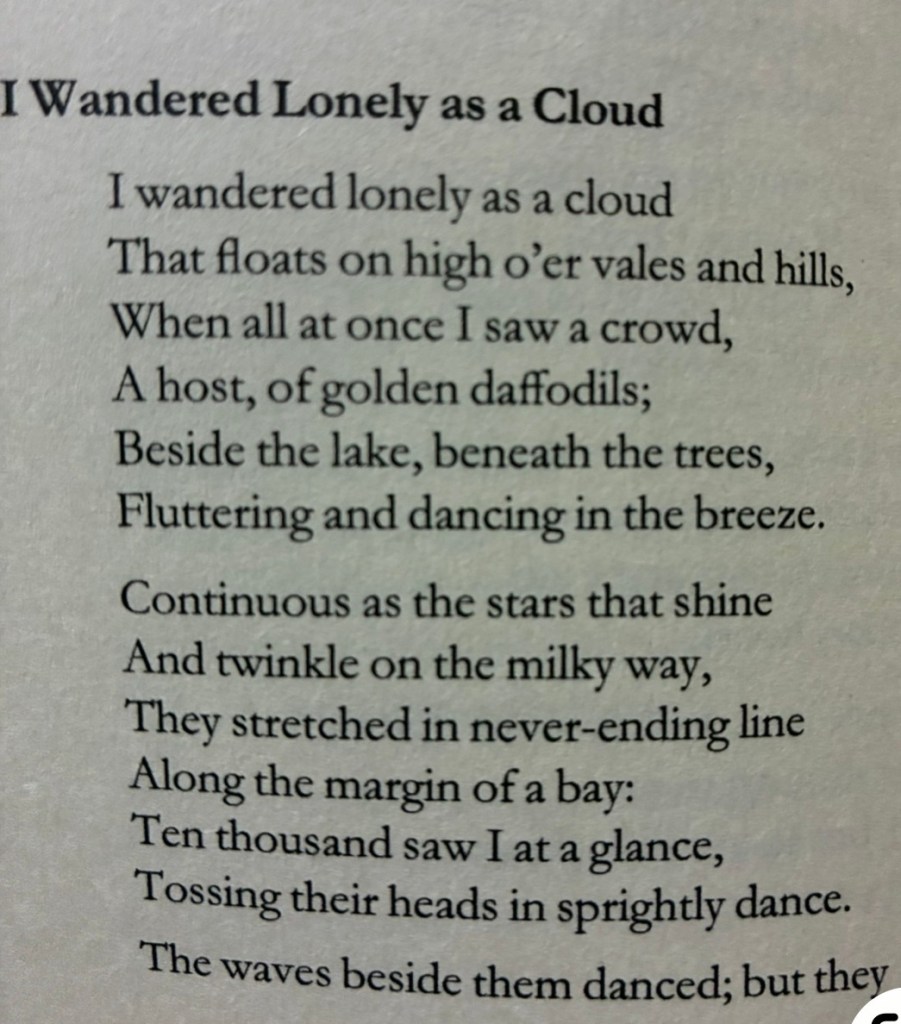
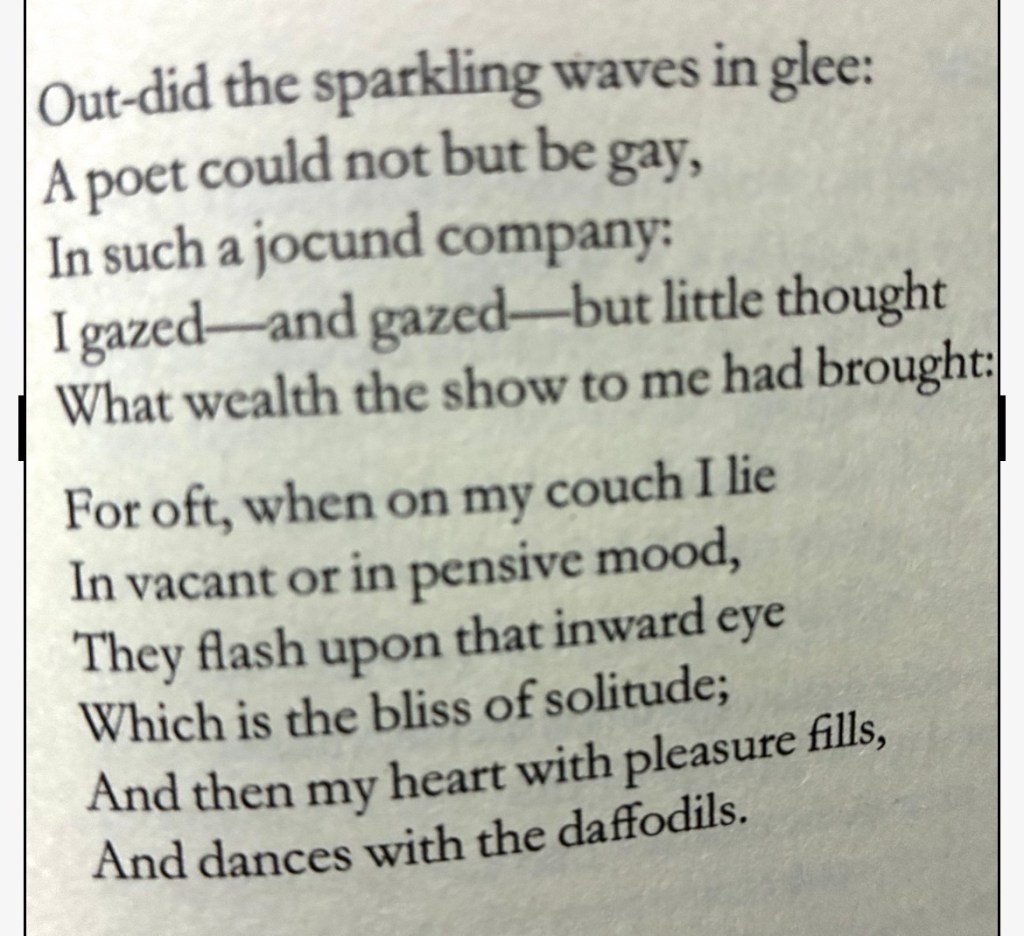
Begs the philosophical question of ‘is a cloud really lonely or is it it comfortable in its own space’? (Carol)
As usual – answers on a postcard please.
NB it was his sister ‘Dorothy’ who was the first woman to walk / climb Scafell Pike in 1818 and write an account of it (see previous blog as to ‘when did walking become a thing’)
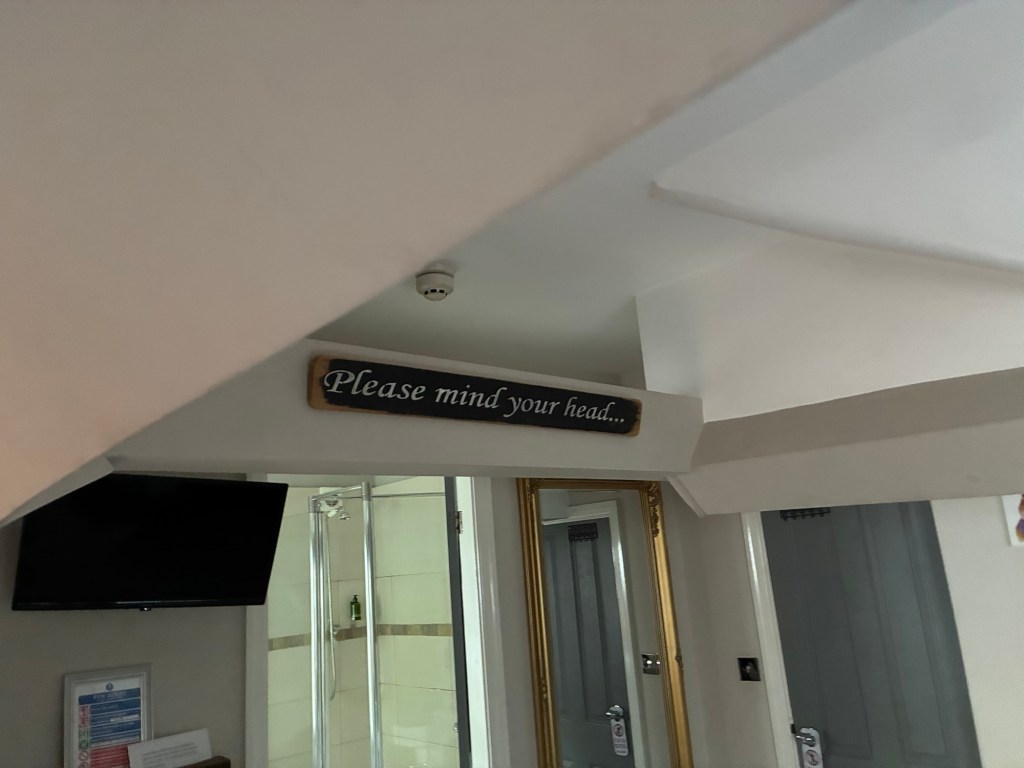
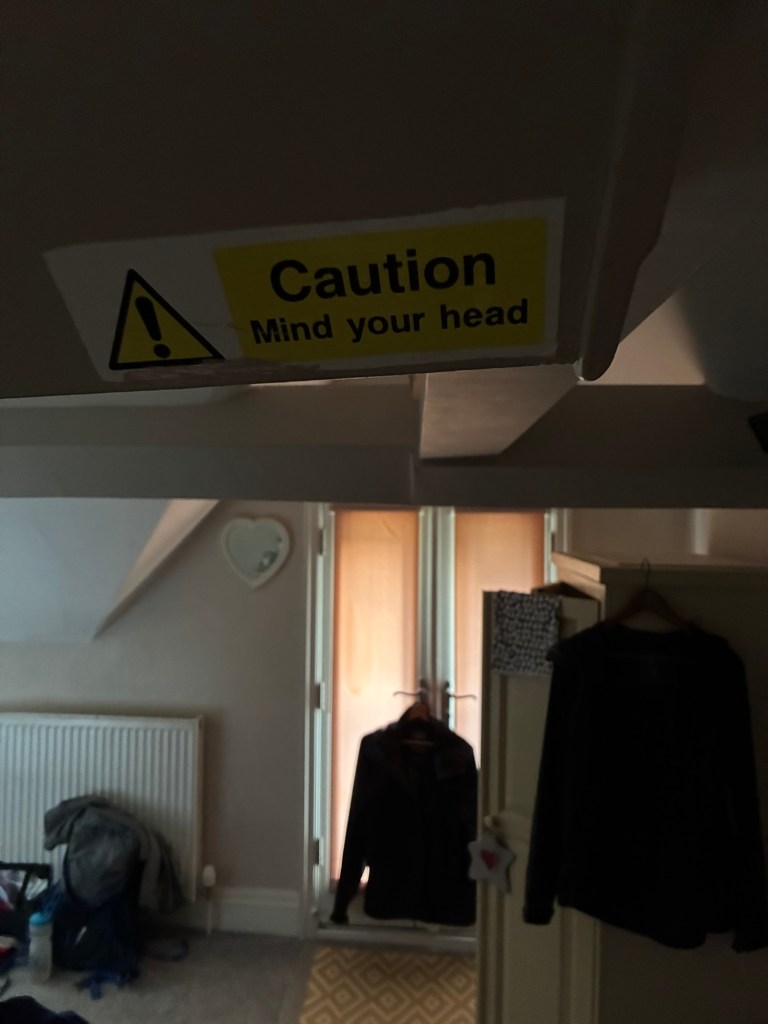
Had to remember to say ‘duck, duck’ every time we moved around in the room.
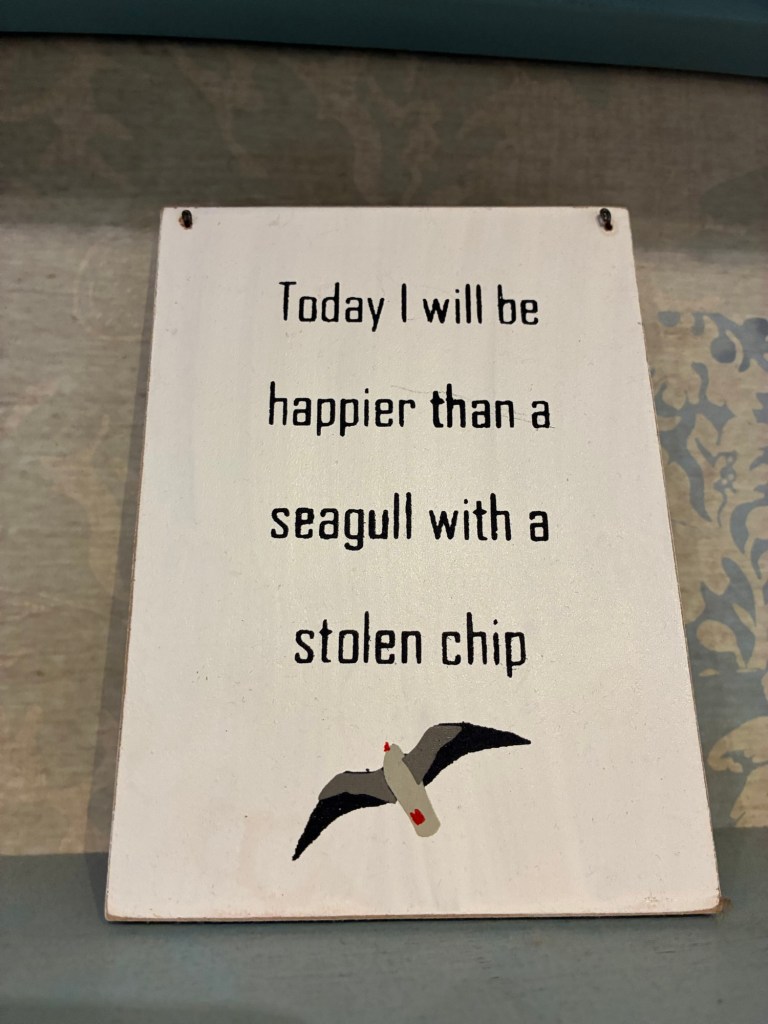
Enough of last night. Words of wisdom for today
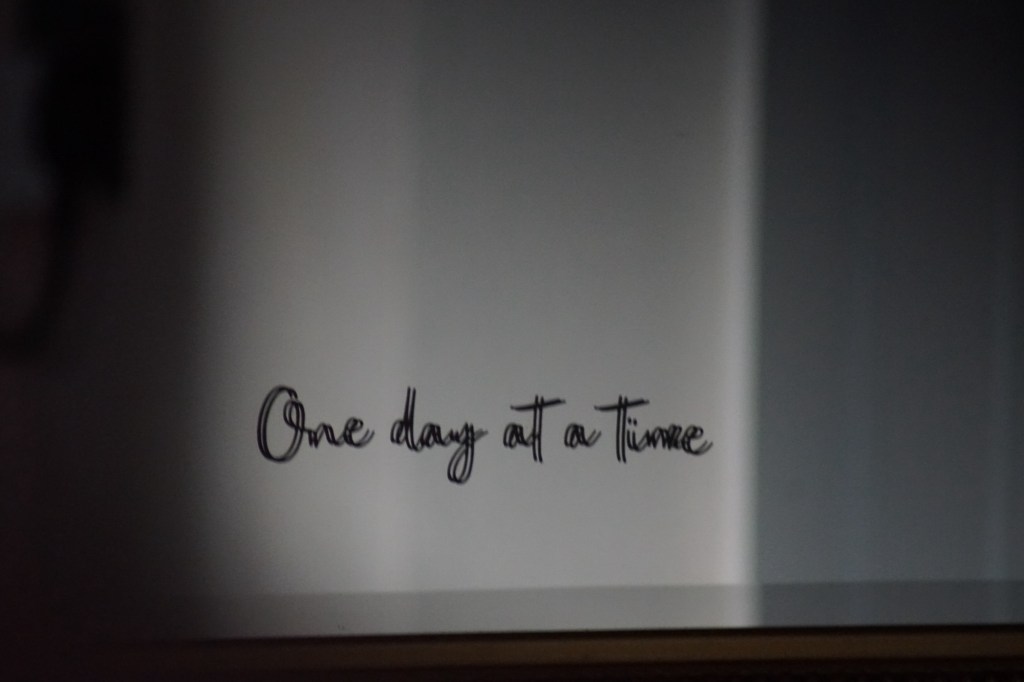
… at breakfast this morning .
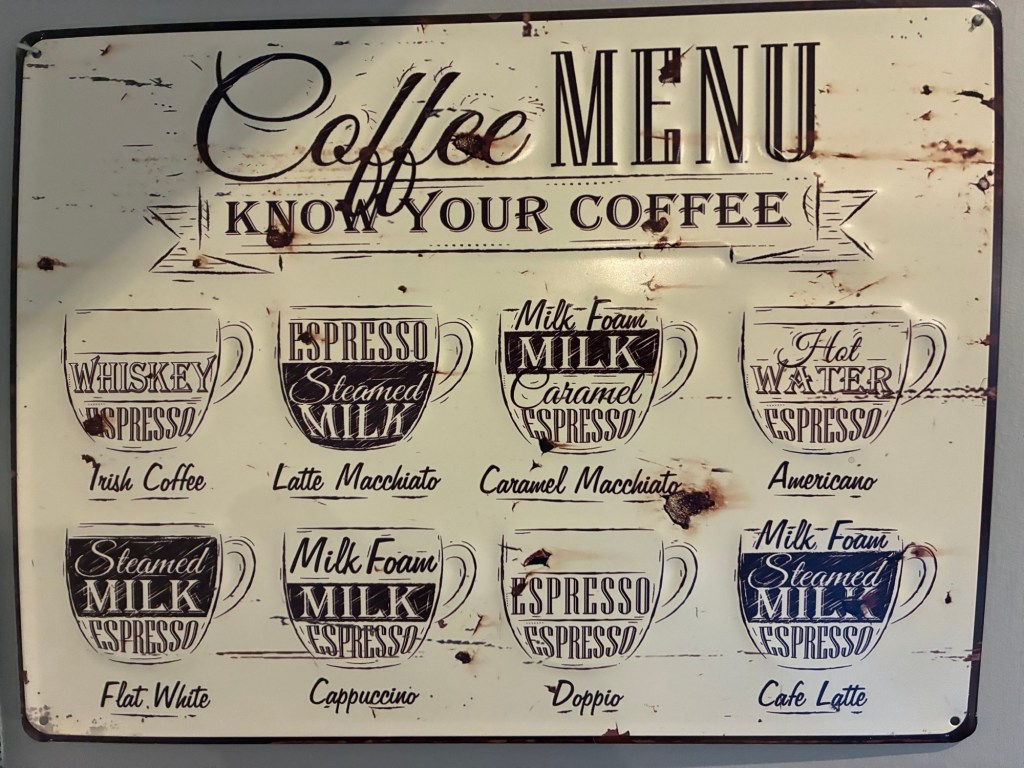
… And in case you were still confused about the various cups of coffee you might like to order …
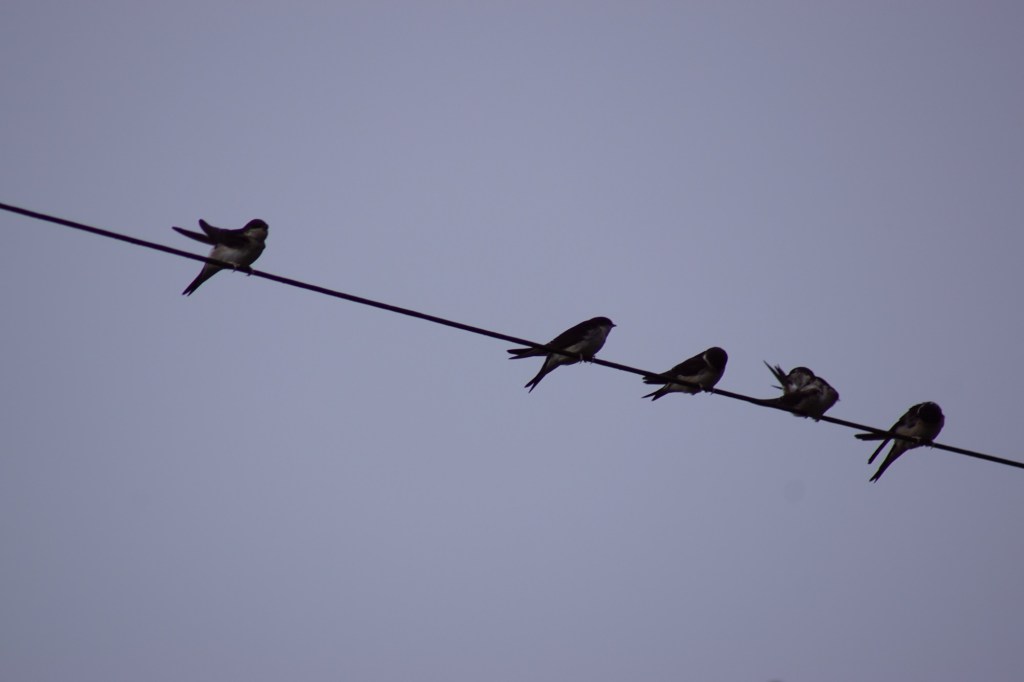
A glorious warm start to the walk today if not overcast
The swifts were having a great morning
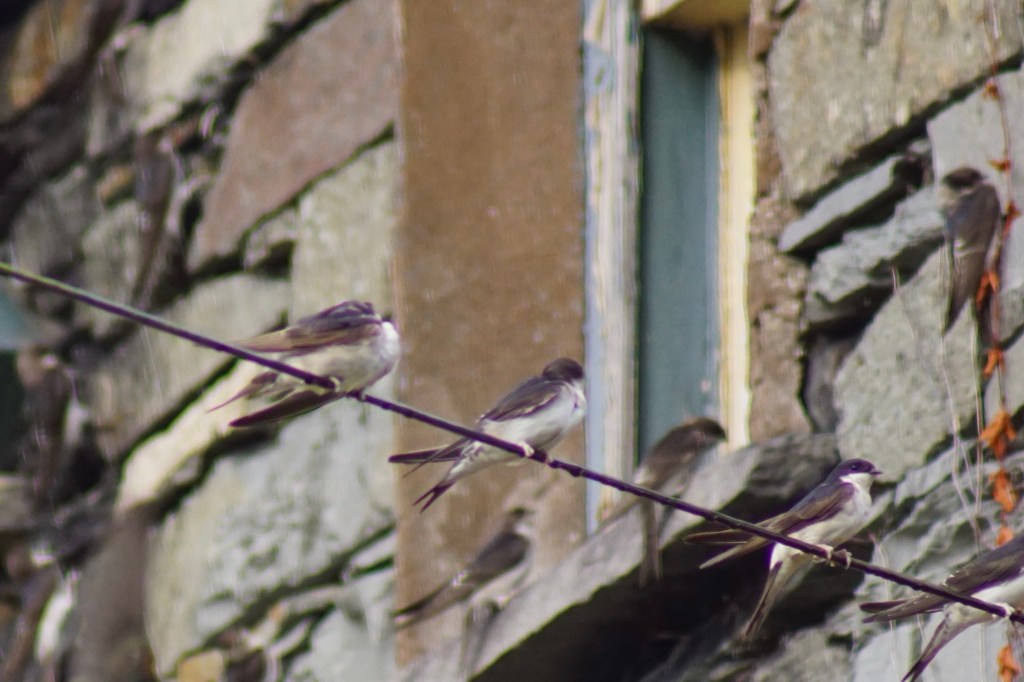
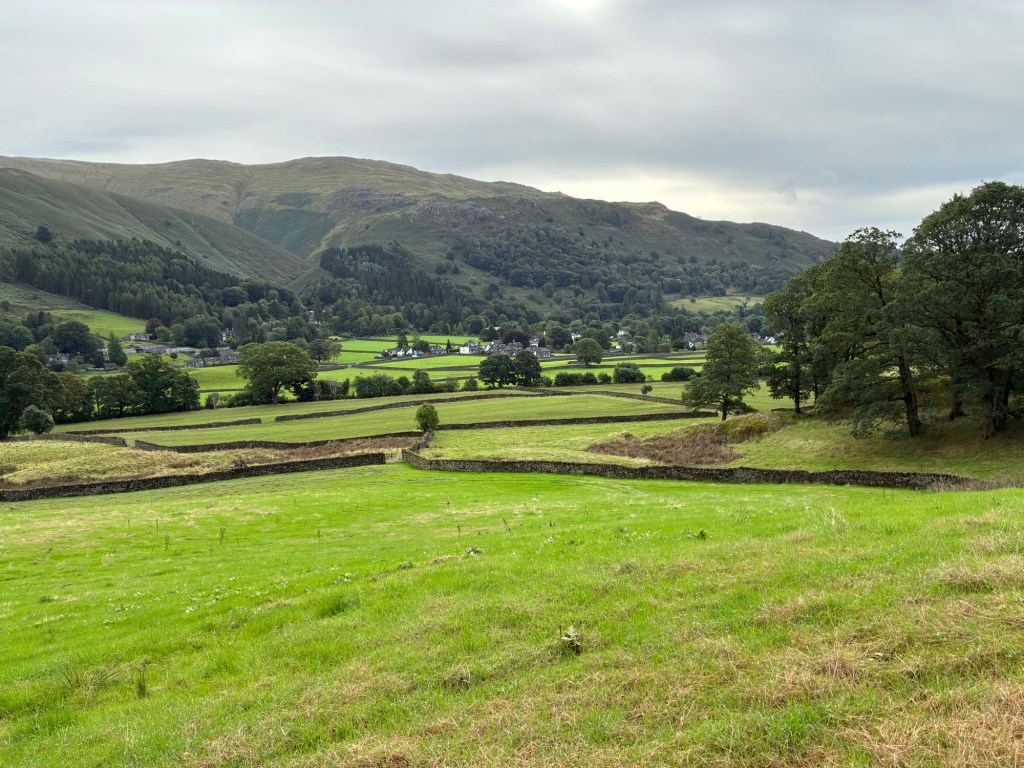
But the sun soon came out –
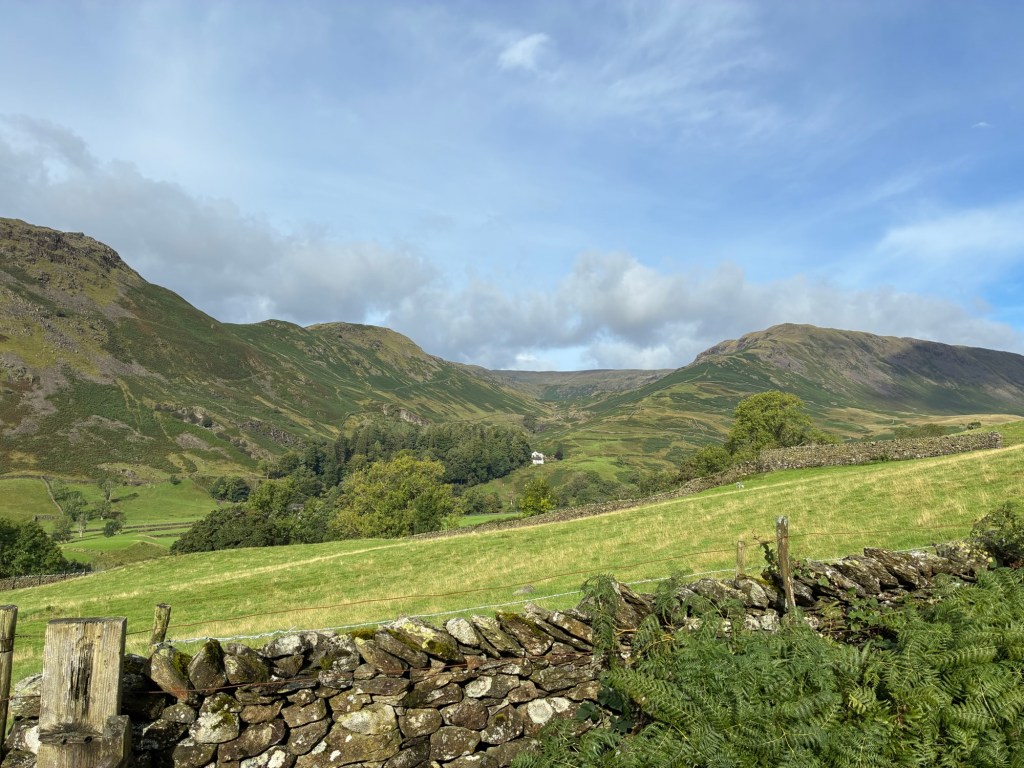
… and then a mile or so in the climb began up to Grisedale Tarn , taking the right sided route around the ‘Great Tongue’ – an obvious land formation when you stand facing it .
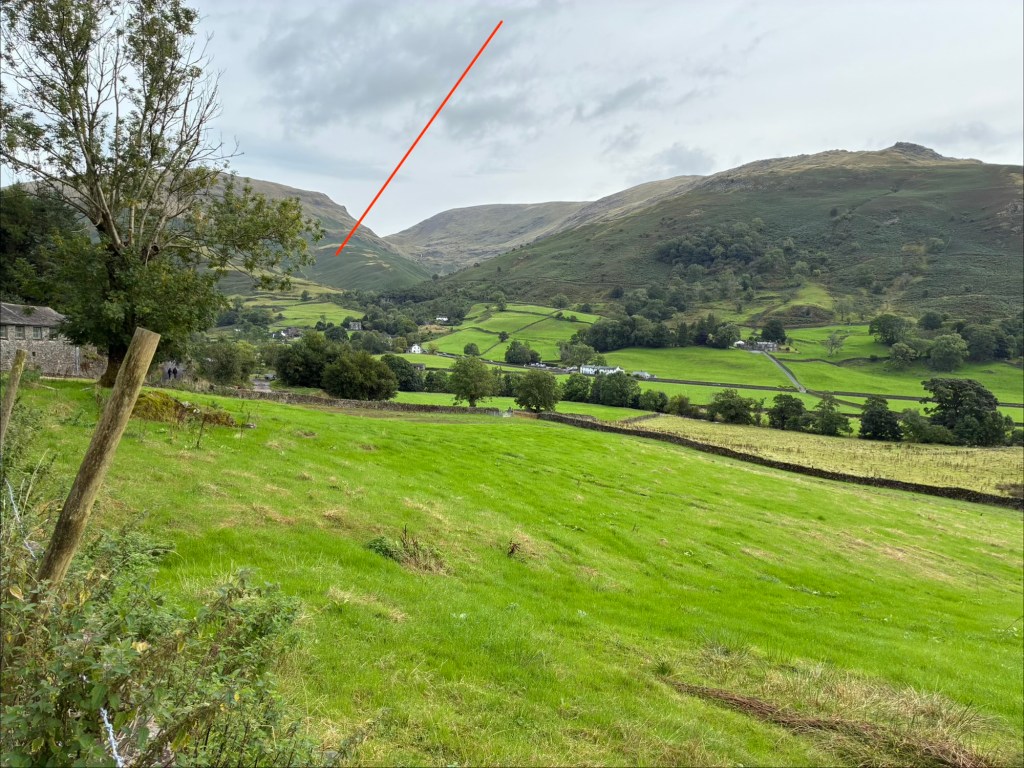
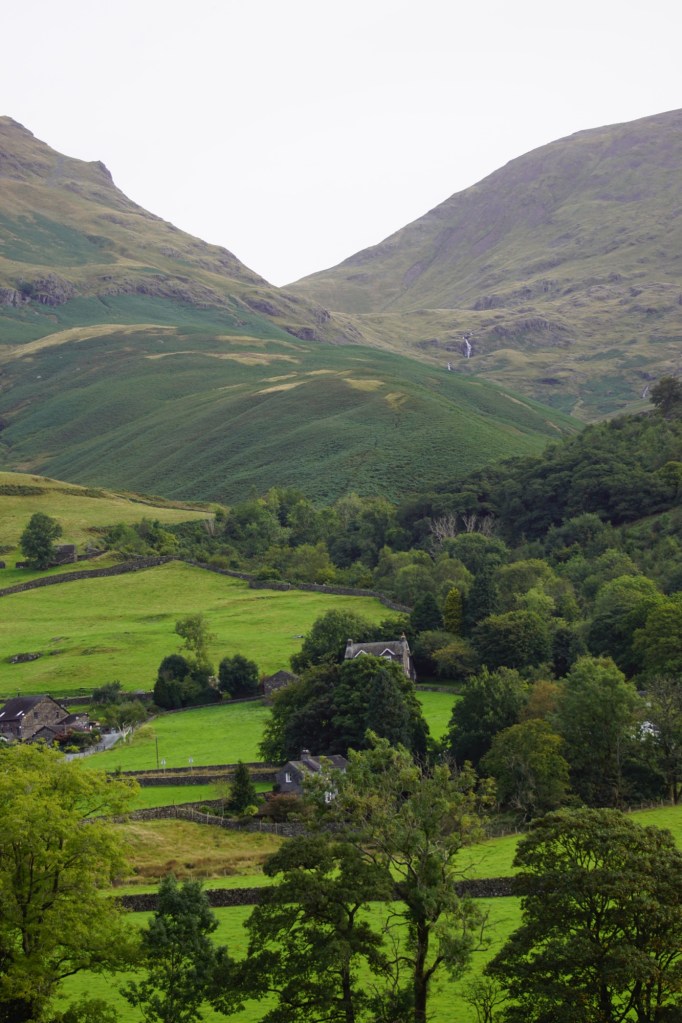
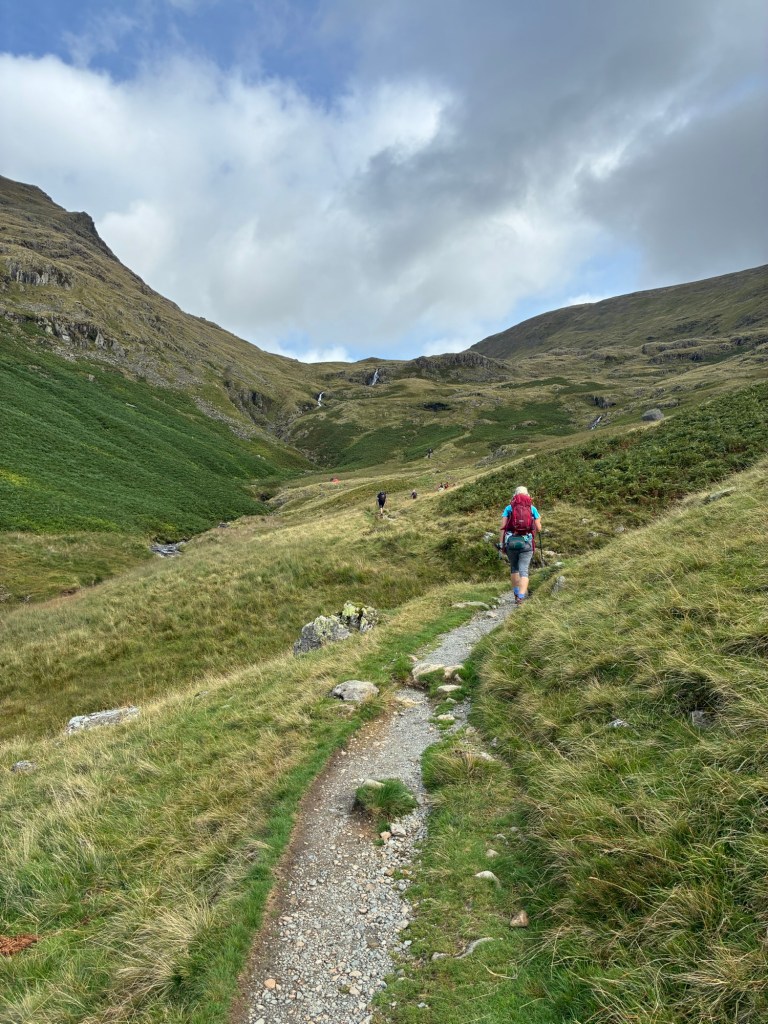
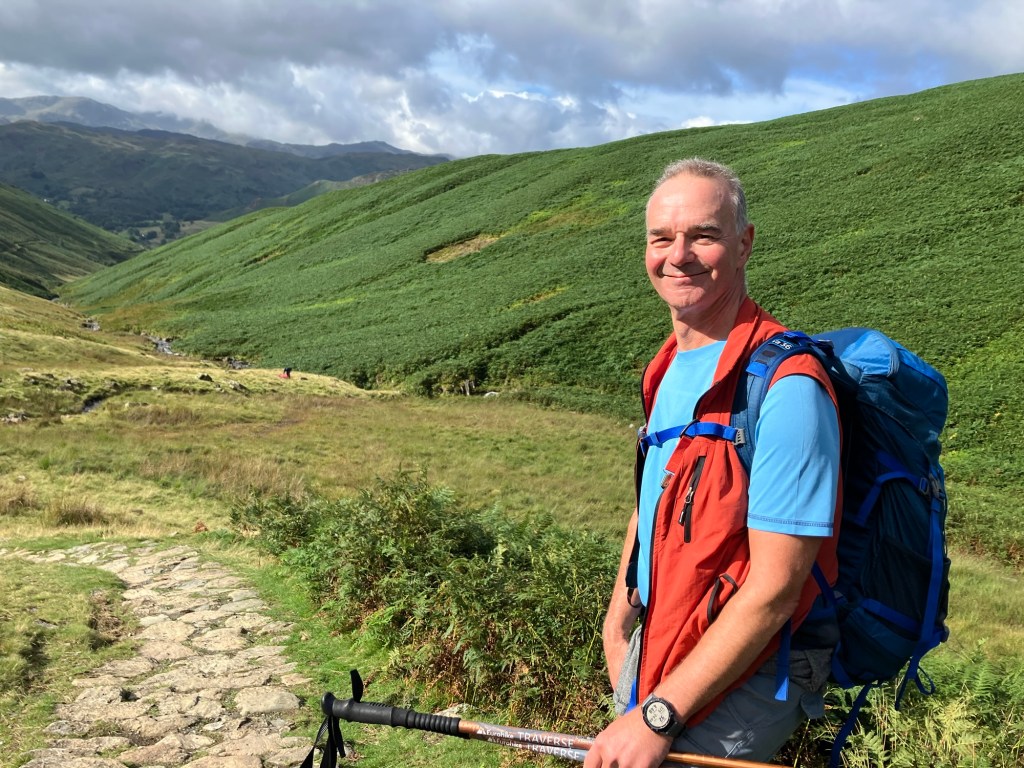
Met our fellow walkers again … Liam (the guy who overtook us day 1 up Dent hill) … Stephen and Melissa from Australia (Queensland) … and the 4 other Australians whose names we haven’t got hold of yet. … plus Mary and her friend doing the walk in 2 stages
Quite a community bunny hopping day to day, everyone walking at their own pace but meeting along the way or at breakfast or in the evening depending on where everyone is staying.
Learned a bit about Queensland – the place ‘where you don’t want to go as everything wants to eat you’ (quote Daniel de Kock 2024 when we visited the de Kock family in Sydney). What we heard made us feel no less reassured as Stephen and Melissa recounted how their neighbour has a Mango tree in the garden and a python used to live in it and feed on the possums that climbed to get the fruit !!!! 😱.
Makes a few rats in the back garden by the compost heap sound dreamy 🤦♂️
… and finally
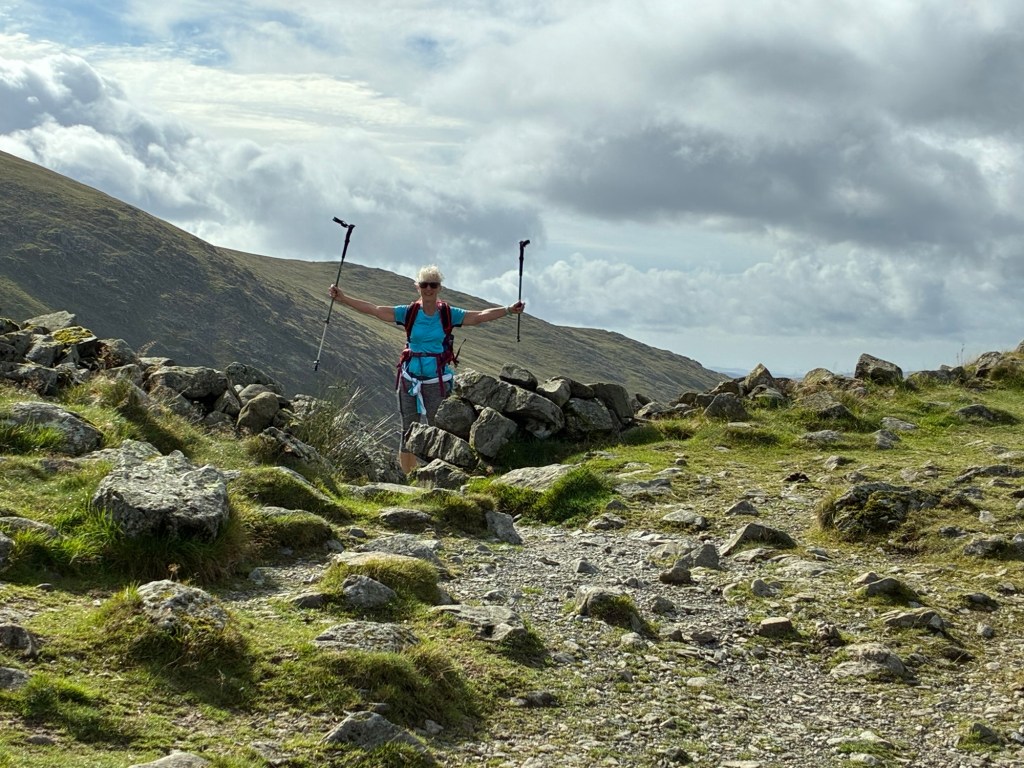
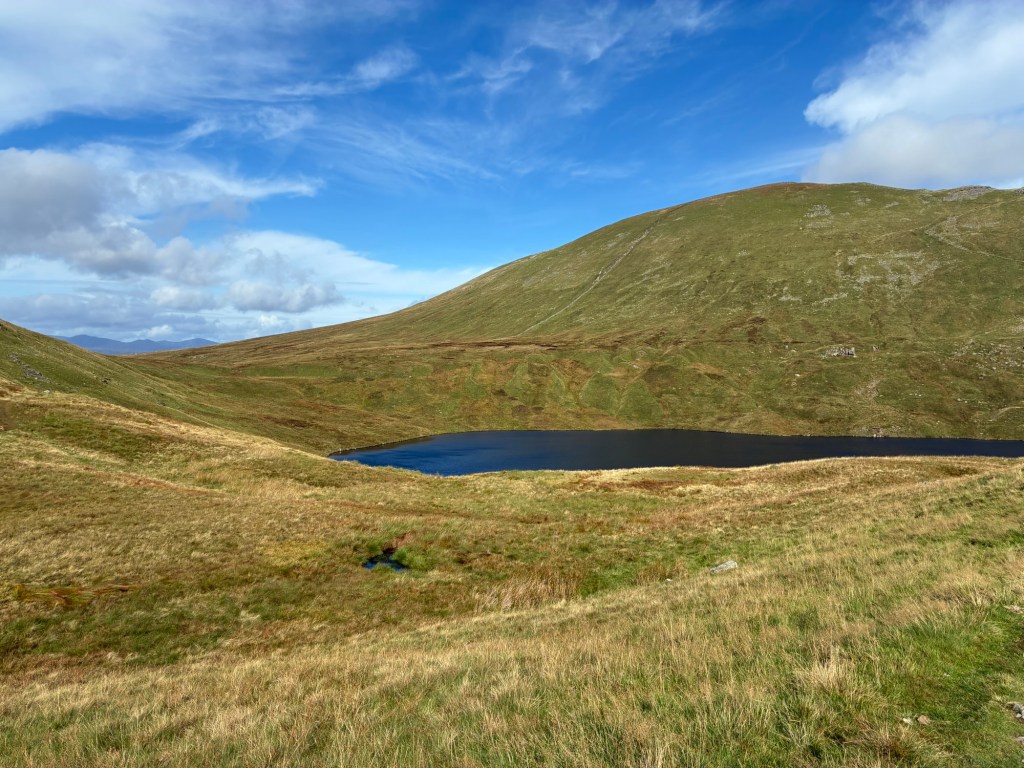
… here is where Wainwright says (p31 A Coast to Coast walk, Readers edition , copyright The Estate of A. Wainwright 1973, publ Frances Lincoln 2017), “Before proceeding beyond the tarn, sit down awhile and consult a) the weather b) the time) c) the state of the blisters and d) the note on p 34” which gives the pros and cons of the left route up Helvellyn, the right route up St. Sunday Crag or the direct route down the valley.
We duly sat down, had a snack and contemplated .
No blisters- ok . Time 11:00 – ok. Weather – well… a classic example of Lakeland weather (see next pics)
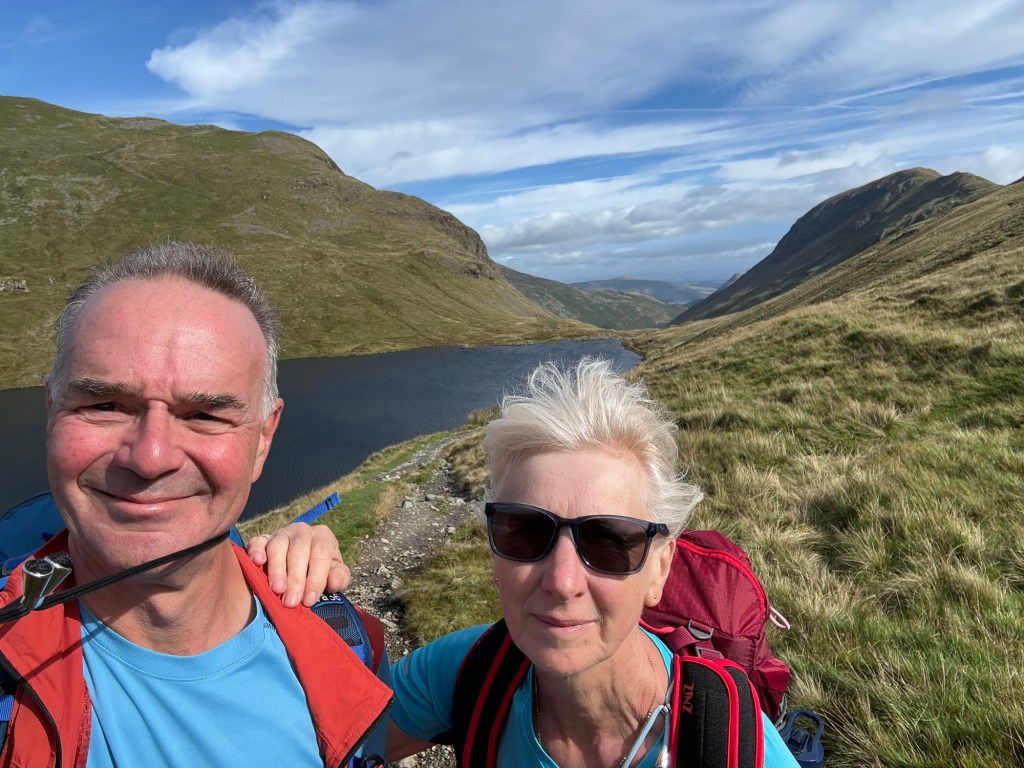
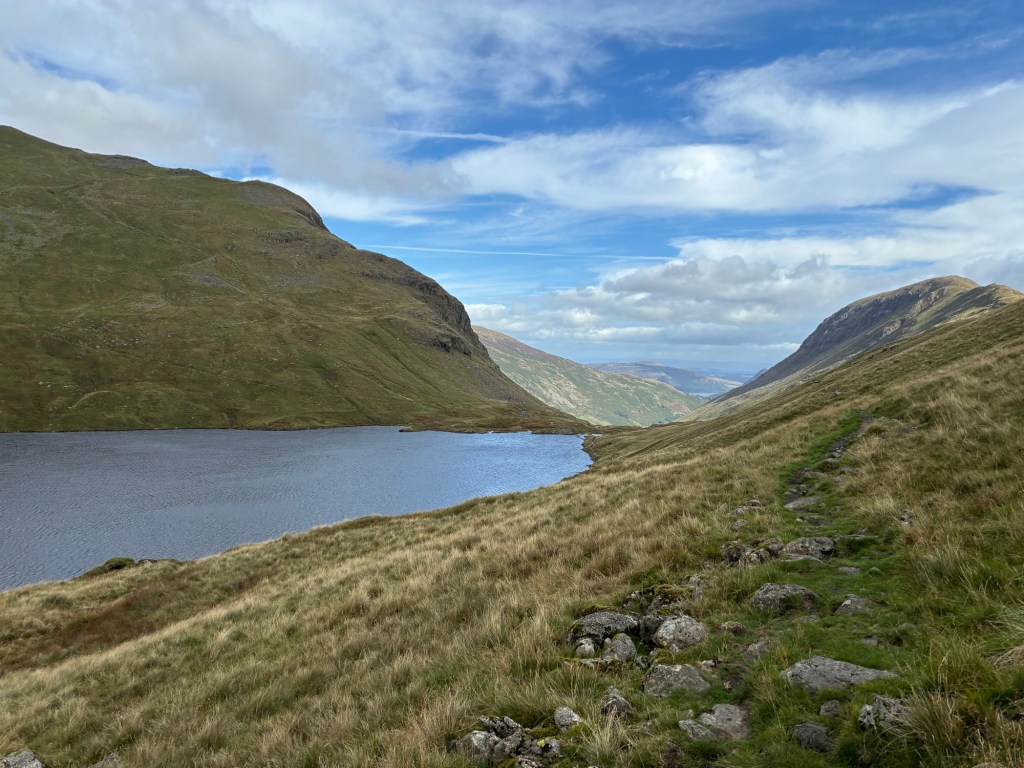
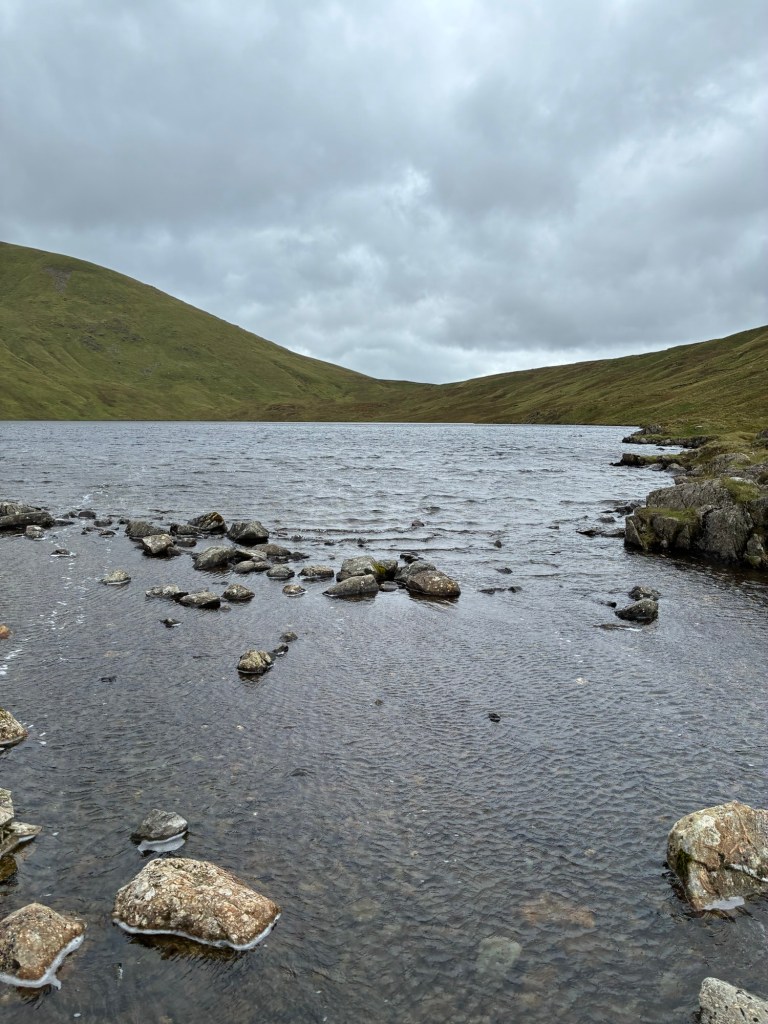
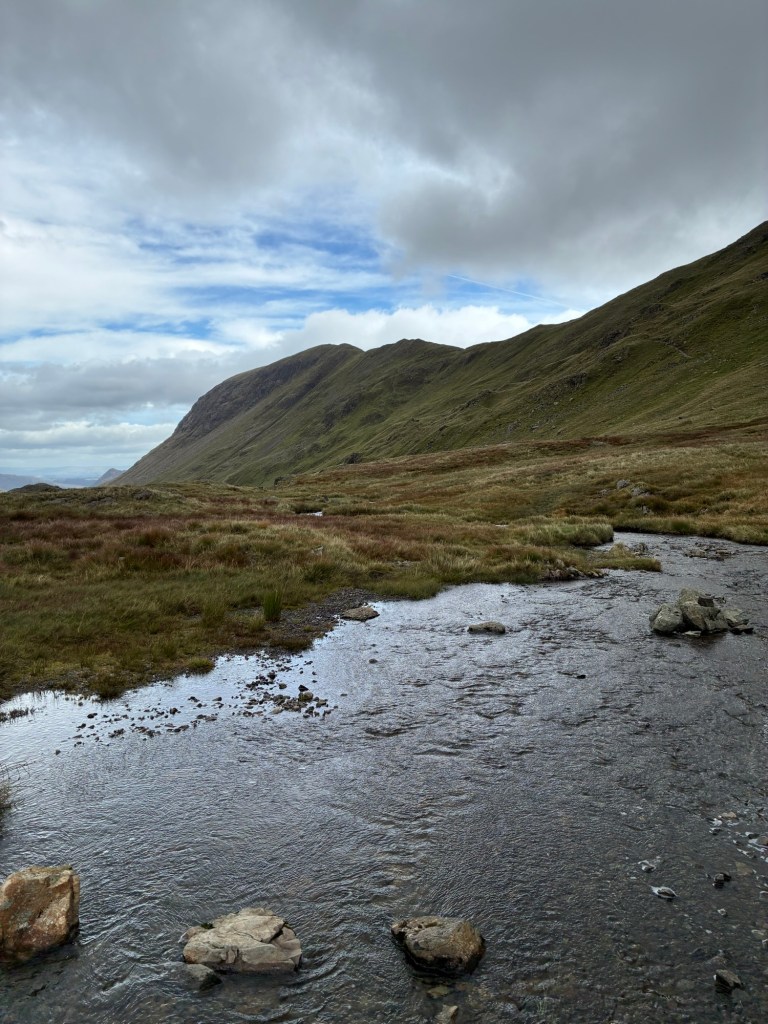
Like most others we took the sensible route.
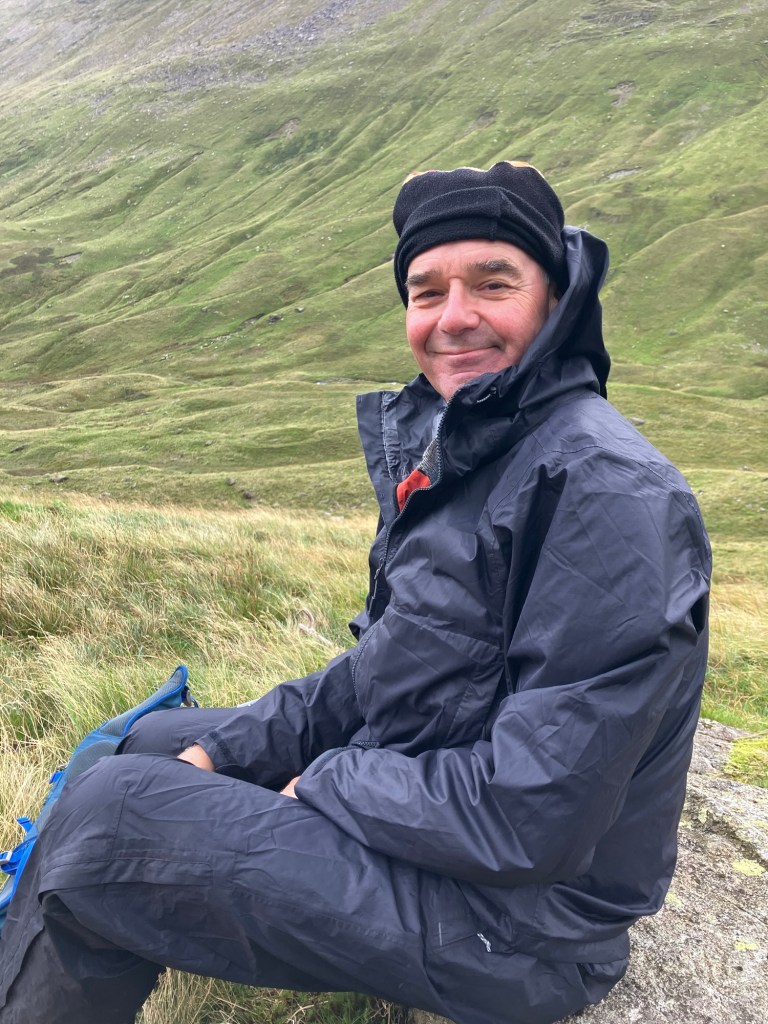
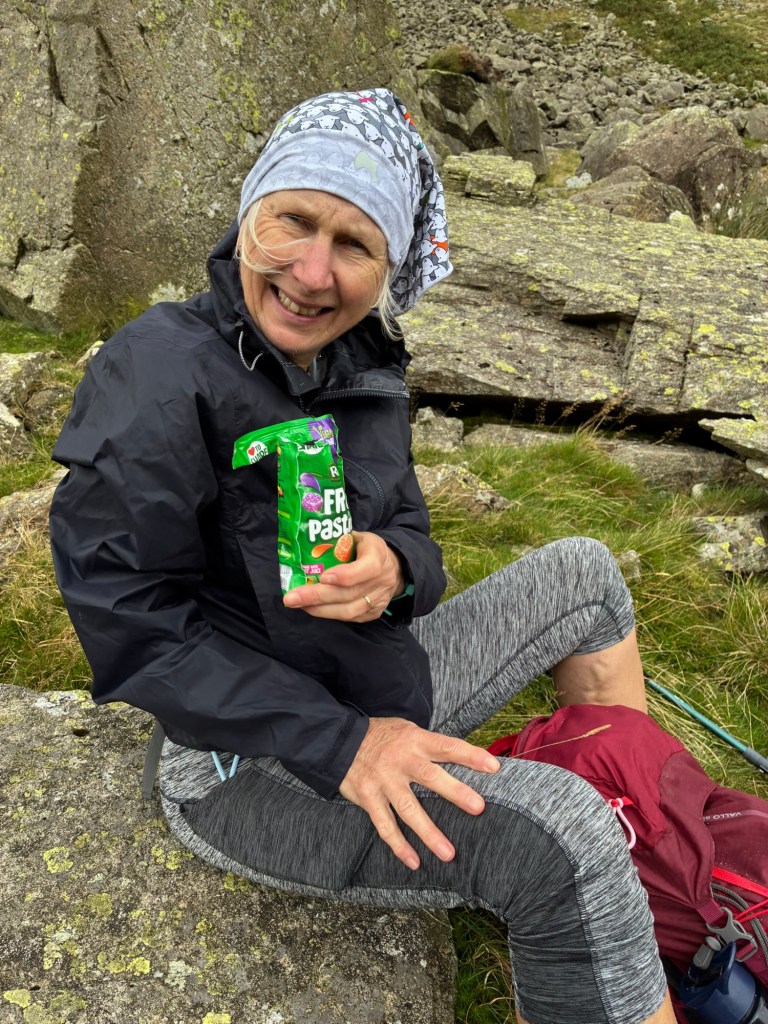
… anyone for a sweety ?
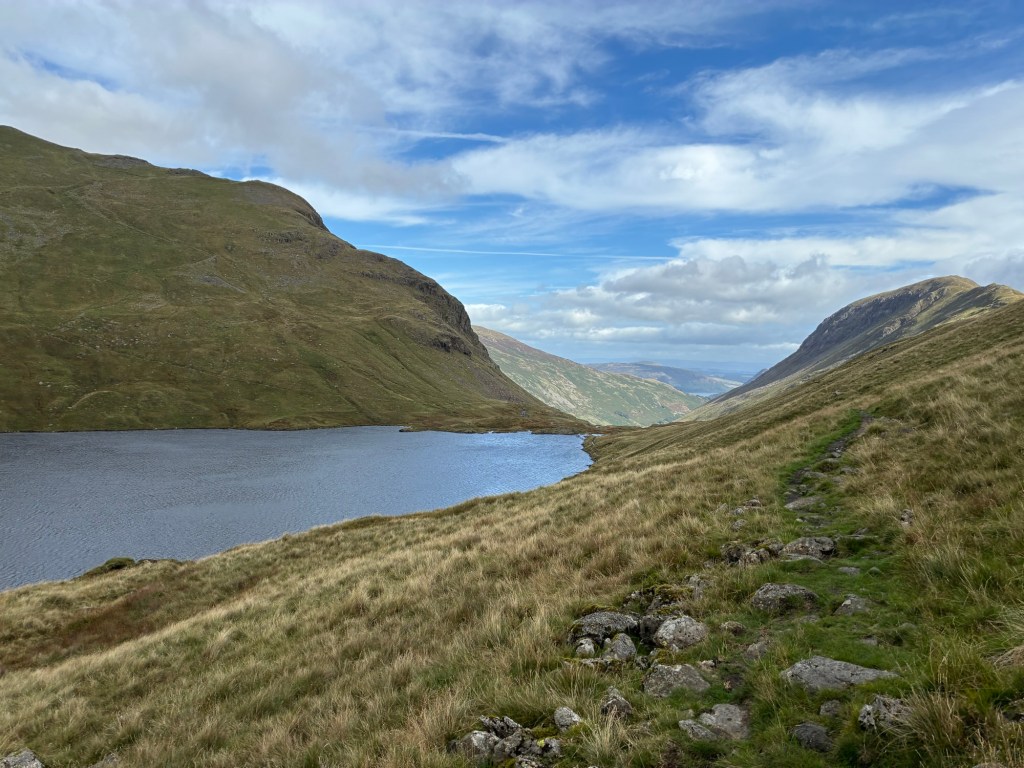
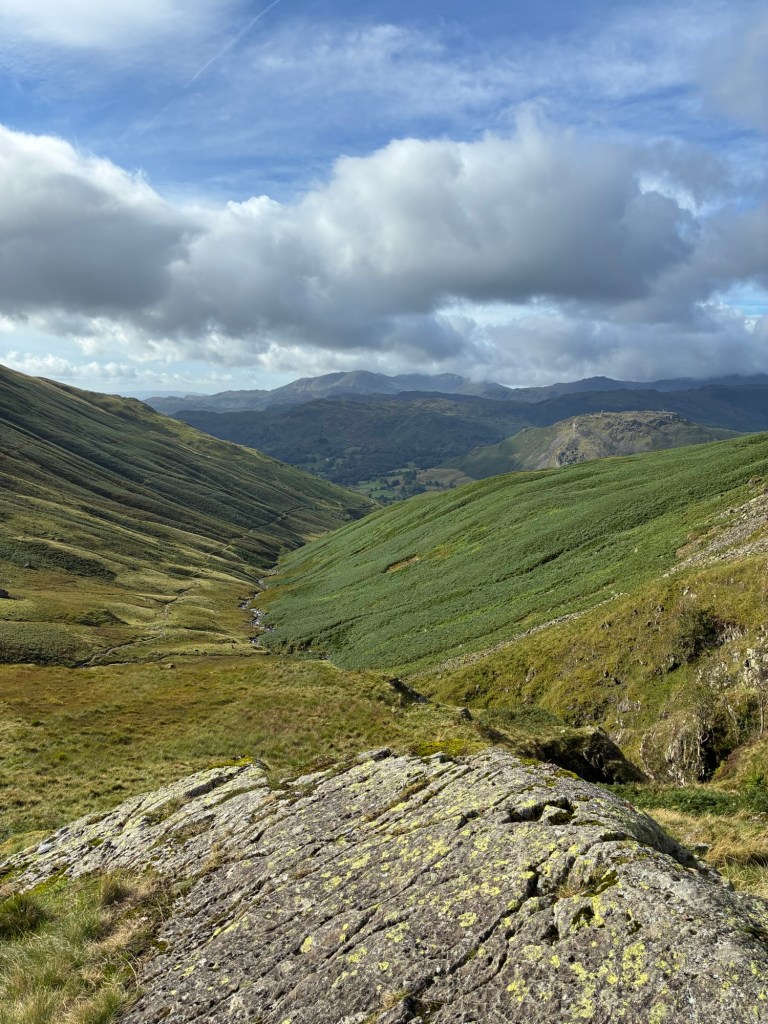
Some ongoing fabulous views even down the Grisedale Beck valley.
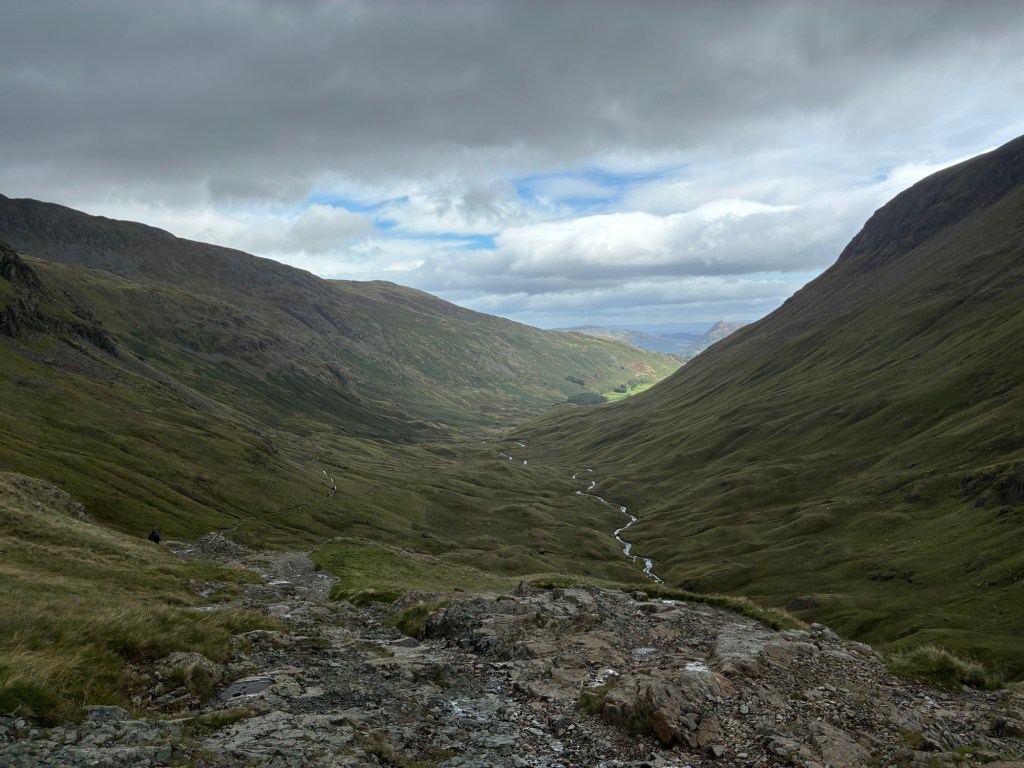
… and up the valley
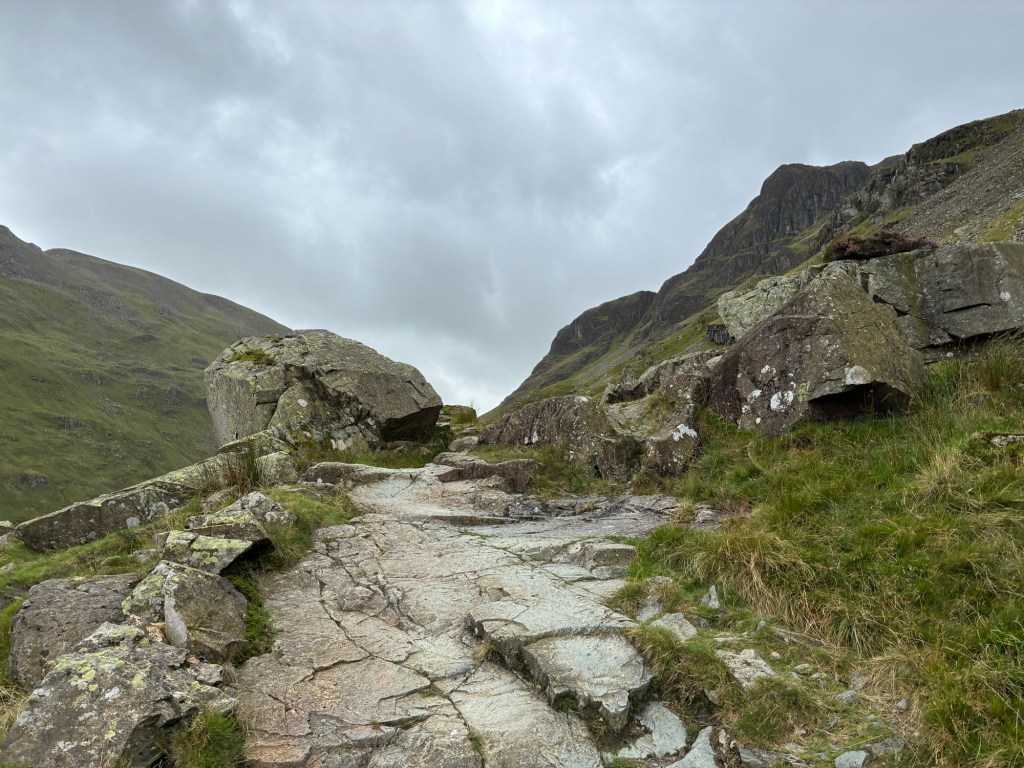
before reaching low ground.
At low level…. Thought I’d show you some cows rather than sheep today
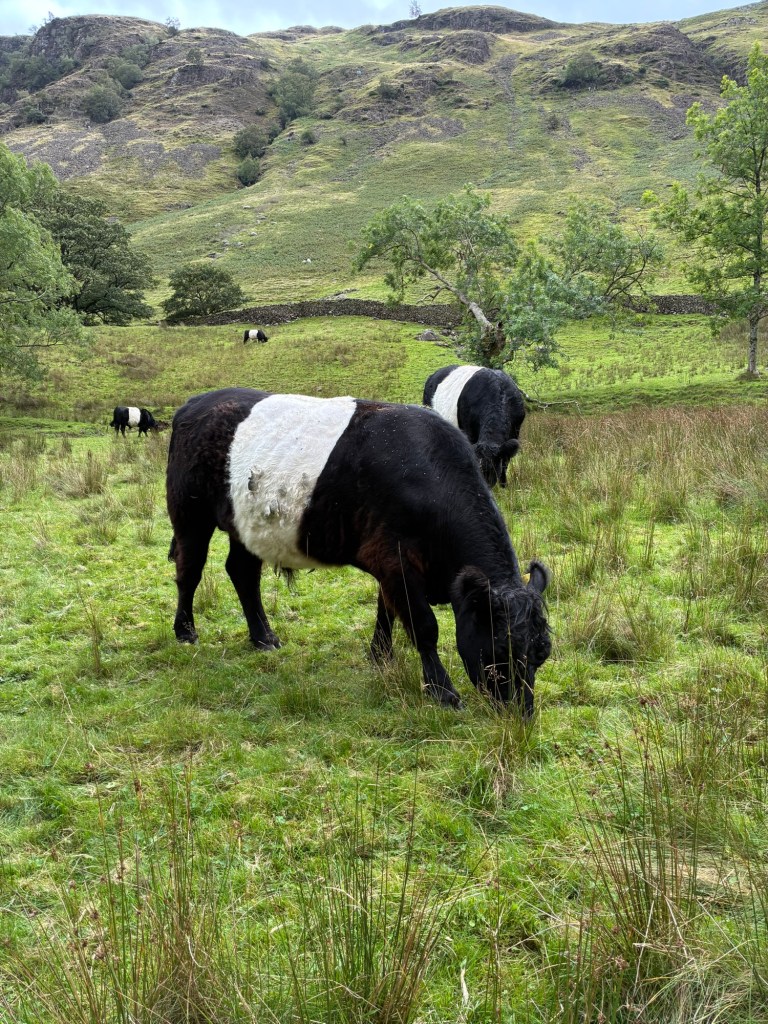
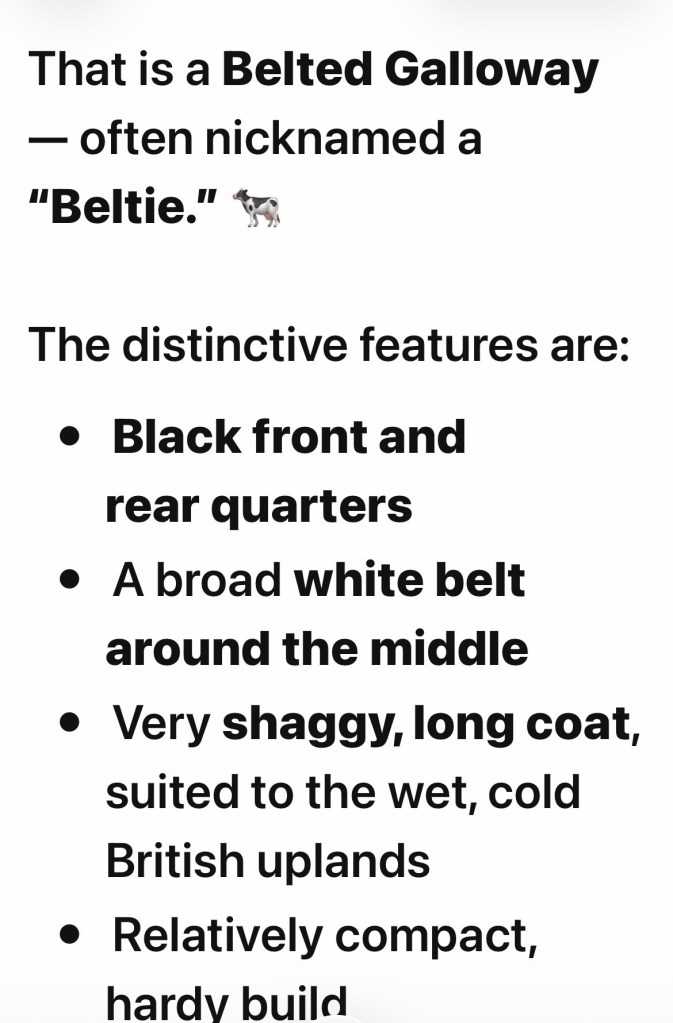
.. and finally arriving at our destination in Patterdale – Old Water View
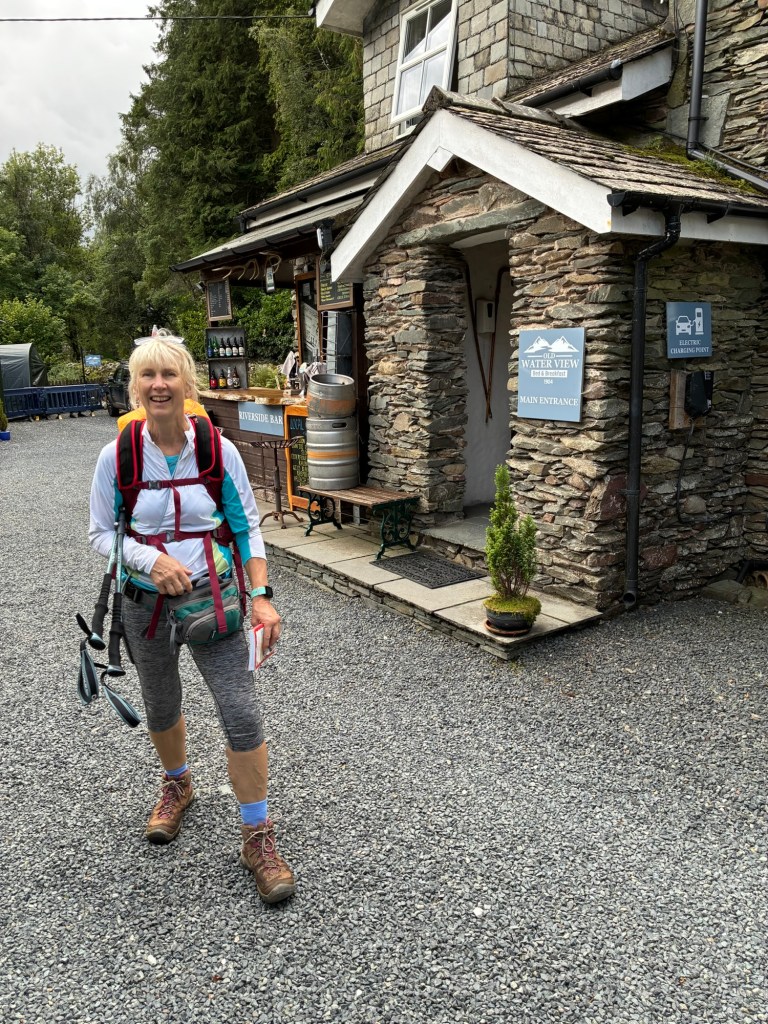
… even beat the Luggage .
… a welcome pint – Ulswater Blonde in a non Ulswater Blonde glass – Still delicious .
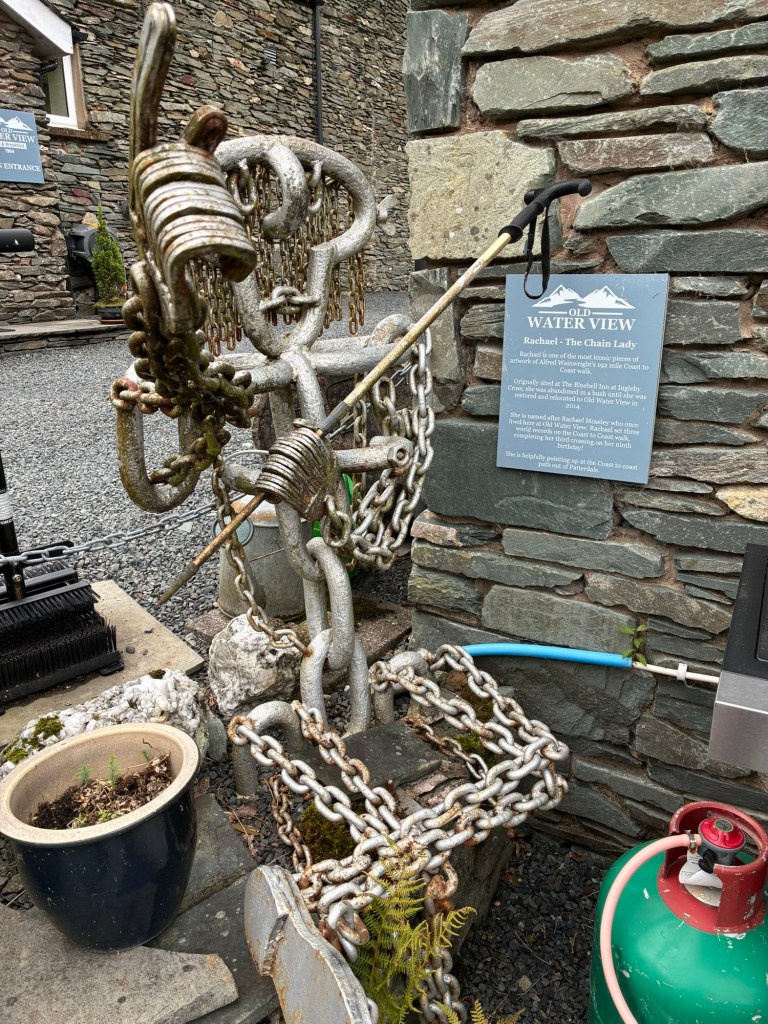
NB – village shop and old post office now gone.
This seems an opportune time to clarify some language – me thinks.
A Gill= a narrow, steep-sided ravine, gorge, or valley with a stream running through the bottom, typically carved by water into limestone or gritstone moorlands, often featuring small waterfalls or rocky drops.
A Beck= a small stream or brook, typically with a stony or rocky bed. It supposedly comes from the Old Norse word bekkr, which means a brook. It dates back to the Viking settlement of northern Britain.
A Tarn = a small mountain lake or pool that forms in a bowl-shaped hollow, and supposedly comes from the Old Norse word tjörn, which means a teardrop or small pool.
A Fell = a high and barren landscape feature, such as a mountain or a moor-covered hill, most commonly found in Northern England, Scotland, the Isle of Man, and Scandinavia, supposedly coming from the Old Norse word fell or fjall, meaning mountain. It was brought to Northern England by Viking settlers. In places like the The Lake District locals use “fell” instead of “mountain” or “hill”. These landscapes feature steep slopes, rocky terrain, and exposed summits above the tree line.
A Crag = a steep, rugged, and rocky cliff or rock face that projects outward from a mountain or hill. The word comes from the Celtic languages (like Welsh craig and Gaelic creag), which simply means “rock.”Unlike a smooth slope, a crag is jagged, exposed, and weathered, often featuring sheer drops and broken rock debris (scree) at its base.
… that’s enough… really.
This evening we are staying here rather than walking to the pub so no crumble or STP. Jacket potato and trimmings is on the menu … plus a drink I suspect.





Leave a Reply